


EDE MÖSER
Administrative Direction
Ede studied business and economics at Friedrich Schiller University Jena, where he completed a master’s degree in business administration. He spent a semester at the University of Agder in Norway. As a student, he led projects with local businesses at JenVision, a student-run consultancy, and went on to chair the association.
Advising founders at the university gave Ede first-hand insight into what it takes to move research from the lab into practice. Through the International Startup Campus, a joint initiative of the universities of Jena, Leipzig and Halle-Wittenberg, he developed Entrepreneurship Education and Accelerator programmes for DeepTech startups, built international knowledge transfer networks and helped teams explore markets in Japan and Vietnam. He later coordinated the university’s international knowledge transfer activities through its International Startup Office.
Ede also worked to expand startup support and strengthen ties within the regional innovation ecosystem. He initiated partnerships with organisations such as Wissensfabrik, SPRIND and Young Entrepreneurs in Science, where he is also a certified trainer and scout. Together with his team and the university’s Graduate Academy, he brought Falling Walls Lab to Jena. He also contributed to strategic funding initiatives, including measures to embed knowledge transfer and research-led entrepreneurship more widely across the university as part of Jena’s bid under Germany’s Excellence Strategy. In Germany’s flagship EXIST Startup Factories competition, he played a key role in bringing partners from Thuringia and Saxony together and shaping the successful bid for boOst.
Today, Ede leads JENAINNOVATION. He draws on his experience in developing funding and support structures and his strong connections with research institutions, companies and startup networks to initiate new collaborations and help research ideas move towards practical application.
He is particularly interested in the economic and societal impact a scientific discovery could have. What draws him most to this work is the moment when a curious “What if?” becomes a shared “Let’s give it a try!”
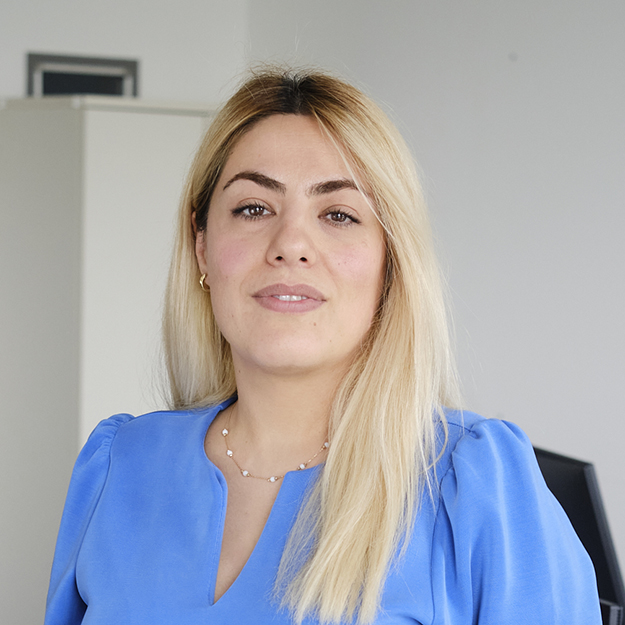
Samira Babalou
Innovation Scouting for Digital Technologies and Artificial Intelligence
Samira studied Computer Engineering at the University of Science and Culture in Tehran and subsequently earned her PhD in Computer Science at Friedrich Schiller University Jena. Her research focused on ontology integration and on developing methods for building high-quality merged ontologies by combining structured knowledge models from different sources.
Before her PhD, Samira gained practical experience in software development and data analysis. She worked in research and development in the fields of big data and data science, as well as on business intelligence solutions for banking systems. Over several years in academic research in Jena, she worked extensively with knowledge graphs, semantic technologies, data integration and software development, and developed and contributed to several research software platforms. During her postdoctoral research, she also served as project manager for an interdisciplinary research project. In addition, she gained experience in academic teaching and supervised students working on their theses, helping them develop their research ideas and competencies.
Her technical background spans Python, Java and C++, software development and data technologies, and extends to current areas such as artificial intelligence, machine learning, generative AI, large language models, agentic AI, AI infrastructure and high-performance computing. Today, as Innovation Scout for Digital Technologies and AI at JENAINNOVATION, she combines her scientific and technical background with expertise in innovation, technology transfer, early-stage technology evaluation, startup development and research-driven entrepreneurship.
Samira has a particular talent for structuring complex information and turning it into practical solutions. Combining her background in knowledge representation with her enthusiasm for software development, she has designed and developed a custom digital platform for JENAINNOVATION. The platform connects people, research ideas, projects, and knowledge in one system, helping to streamline everyday workflows.

Michael Biermann
Innovation Scouting at the University of Applied Sciences Jena
Michael studied microbiology at Friedrich Schiller University in Jena and completed his PhD at the Leibniz Institute for Natural Product Research and Infection Biology (Leibniz-HKI) in collaboration with Wacker Biotech GmbH. His research focused on how to prevent the defective incorporation of rare amino acids during the biotechnological production of proteins using bacteria.
He then worked as a research assistant at the Jena School for Microbial Communication (JSMC). This was followed by roles in project management at the Leibniz-HKI and as Head of Applications and Industrialisation at Microfluidic ChipShop GmbH. During this time, he gained extensive experience in leading international development projects and in collaboration between research and industry, particularly in biotechnology and medical technology.
As an innovation manager on the nucleus project, Michael returned to the university environment. At the University of Applied Sciences Jena, he coordinated the development of new start-up and technology transfer services and contributed to successful applications for third-party funding. In doing so, he established numerous contacts with start-up stakeholders both within and outside the university.
Today, as an Innovation Scout at JENAINNOVATION, Michael contributes his expertise in microbiology, industrial development and university technology transfer. Through his role as Head of the StartUpLab, he is particularly familiar with the people and structures at the University of Applied Sciences Jena. If you’re looking for the right point of contact there, Michael is probably the best person to ask.

Therese Horch
Innovation Scouting for Inflammation Research and Microbiome Technologies
Therese studied biochemistry and molecular biology at Friedrich Schiller University in Jena and broadened her knowledge whilst undertaking a Master’s degree in Biochemistry and Biomedicine at the University of Leipzig. She returned to Jena for her PhD and specialised at the Leibniz Institute for Natural Product Research and Infection Biology (Leibniz-HKI) in natural products from bacteria that live without oxygen. There, she investigated how these microorganisms can be specifically modified using genetic engineering techniques and utilised for medical applications. In addition, she gained experience in industrial drug discovery in the field of medicinal chemistry at Bayer AG in Leverkusen.
Her career then took her to Copenhagen, to the Novo Nordisk Foundation Centre for Biosustainability, where she genetically modified fungi and analysed complex biological data. Here, she utilised synthetic biology to develop fungi for the resource-efficient production of materials, chemical feedstocks and food. In this transfer-oriented environment, she was particularly inspired by the opportunity to translate microbiological research into practical applications.
Back in Jena, Therese continued to develop bio-based solutions at the industrial research organisation INNOVENT e.V. Today, at JENAINNOVATION, she contributes her expertise in synthetic biology, microbial biotechnology, biochemistry and analytical chemistry, as well as her experience in application-oriented research, particularly within our key focus areas of inflammation research and microbiome technologies.
Even in her private life, Therese’s enthusiasm for biology remains undiminished: whether in the community garden or when cultivating edible mushrooms – her interest in the growth and interaction of living organisms extends far beyond the laboratory.
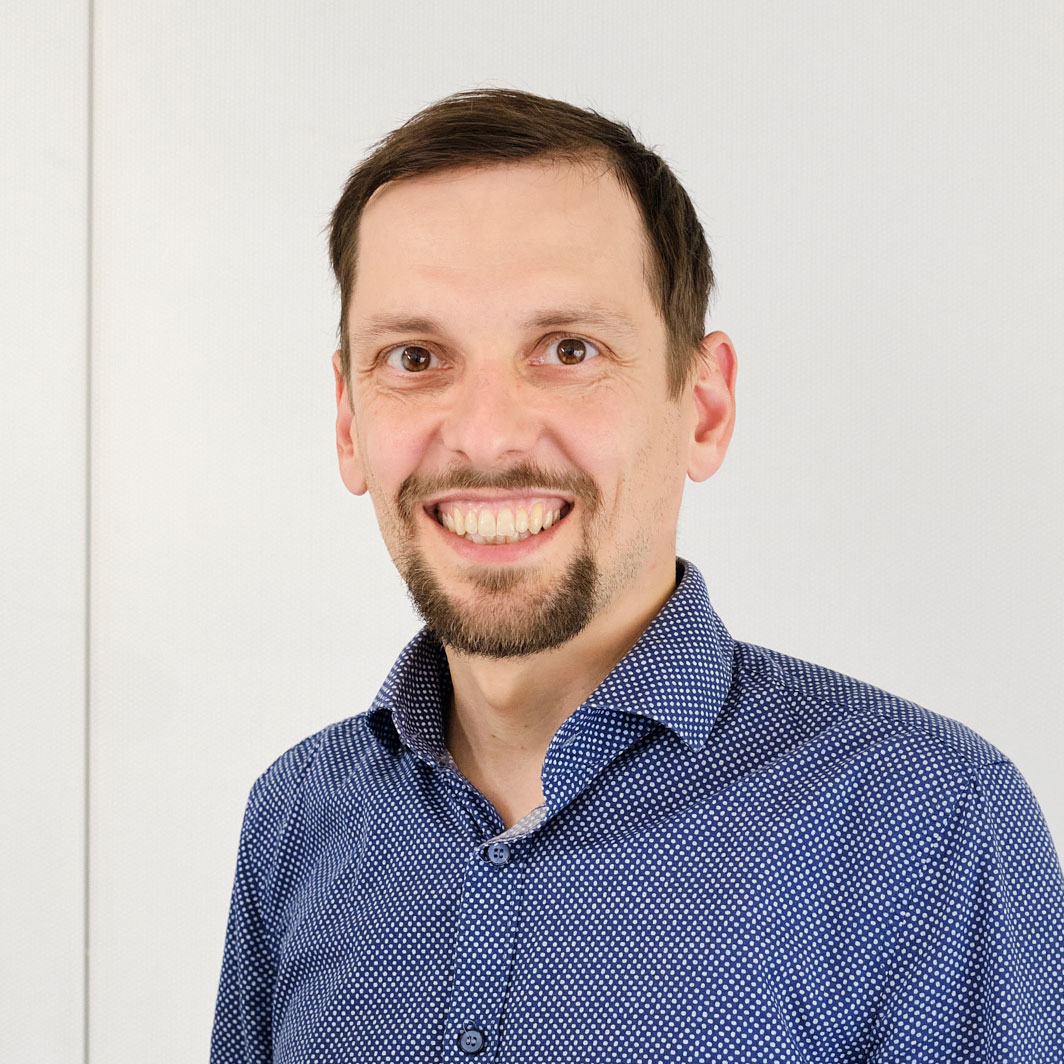
Robert Schroot
Innovation Scouting for Innovative Materials and Resource Efficiency
Robert studied chemistry at Friedrich Schiller University in Jena and completed his PhD at the Institute of Organic and Macromolecular Chemistry. In his thesis, he investigated novel polymer structures that absorb light energy, enabling them to generate and selectively transmit electrical charges – a field of research at the interface of polymer chemistry, electrochemistry and photonics.
After completing his PhD, he moved into industry and took on the role of laboratory manager at Organica Feinchemie GmbH. There, he optimised chemical manufacturing processes and developed them up from laboratory scale to industrial production. He later joined LYB Solvent Recycling GmbH in Merseburg, where he focused on the development and scaling of novel, solvent-based recycling processes for plastics. In addition to technical development, his responsibilities included collaborating with industrial clients, working on interdisciplinary projects and contributing to patent applications.
This means Robert is familiar with both the scientific fundamentals of new materials and the challenges of their industrial manufacture and resource-efficient processing. He now brings this experience to JENAINNOVATION, particularly within our focus area of Innovative Materials and Resource Efficiency.
Even outside from the laboratory, Robert does not shy away from challenging paths: as an experienced mountaineer, he knows how important endurance, good preparation and choosing the right route are, particularly in difficult terrain – these are qualities that are also essential in technology transfer.
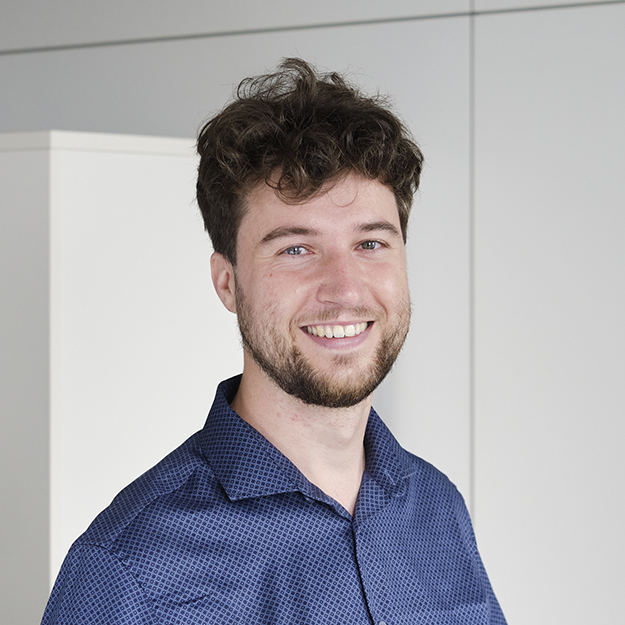
David Sohr
Innovation Scouting for Photonics and Medical Diagnostics
After leaving school, David moved to England, where he studied natural sciences at the University of Cambridge, specialising in physics, materials science and geology. In his Master’s thesis in geophysics, he investigated the variety of shapes found in impact craters on celestial bodies such as the Moon. Using a synthetic gel, he replicated the formation processes in the laboratory and analysed high-speed footage to investigate the underlying physical principles.
Following a research fellowship at the École normale supérieure in Paris, he completed his PhD in collaboration with SCHOTT AG and the University of Lyon. During this time, his research focus shifted to optics and photonics: he investigated the precise machining of glass using ultrashort laser pulses and combined laboratory experiments with numerical simulations to open up new possibilities for glass machining through targeted beam shaping. David then moved to the Institute of Applied Physics at Friedrich Schiller University in Jena as a postdoctoral researcher. There, he advanced his research on glass structuring with ultrashort laser pulses and contributed to teaching activities.
With his experience in university research and industrial development, David is familiar with both sides of technology transfer. He now brings this perspective to JENAINNOVATION, where, as an Innovation Scout, he covers the focus area of photonics and medical diagnostics.
Beyond his scientific work, David is passionate about languages and music. He speaks four languages and is currently learning more. Whether learning a new language or making music, he finds the interaction between structure, creative expression and a spirit of experimentation particularly appealing.
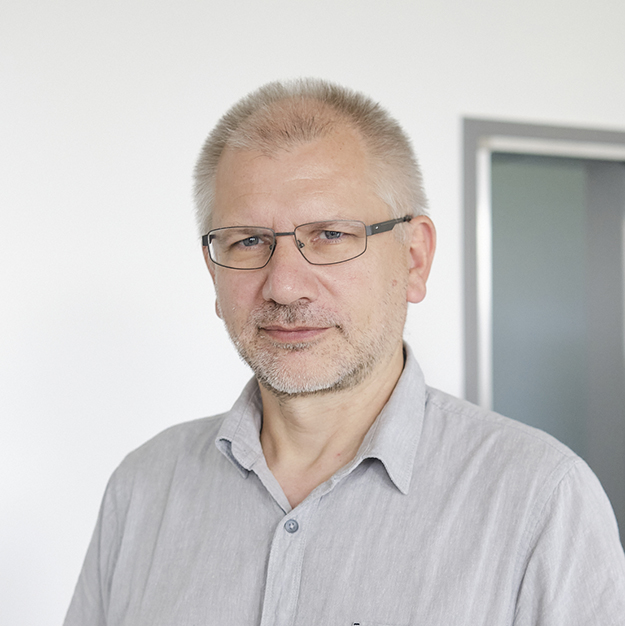
Thomas Uhlig
Innovation Scouting at Jena University Hospital
Thomas first discovered Jena’s innovative spirit during his training as an electronics technician at the Jena Glaswerk where, among other things, high-tech optical glass was developed. He then went on to study electrical engineering and furthered his knowledge in industrial engineering and telecommunications engineering. In his degree thesis, he developed algorithms for digital image processing that can be used to analyse the structures of biochips.
After completing his studies, Thomas started a multifaceted career at a diagnostics company, which later became part of Abbott. There, he worked on the development of medical diagnostic devices, held a managerial role overseeing the implementation of assay procedures, investigated testing methods as part of regulatory trials, and supported the market launch of new products. In addition, he filed several patents of his own.
From working in a start-up to international product launches at corporate level, Thomas is familiar with the challenges involved in taking a medical innovation from concept to market-ready product. Through numerous further training courses in medical device development, diagnostic regulations and management, he combines technical know-how with in-depth experience in the healthcare industry. He now brings this expertise to bear as an Innovation Scout at Jena University Hospital, where he supports the transfer of innovations from medical and health research.
And should conflicting interests ever arise, Thomas – as a trained conflict manager – knows how to keep a cool head and find solutions.

Toni Wille
Innovation Scouting for Innovative Materials and Resource Efficiency
Toni studied precision engineering at the University of Applied Sciences in Jena and furthered his knowledge with a Master’s degree in Laser and Optical Technologies, specialising in precision engineering. He is currently undertaking his PhD in collaboration with the Technical University of Freiberg on additive manufacturing technologies, better known as 3D printing. His research covers various processes, including bath-based photopolymerisation and material extrusion. A particular focus is on the production of functional components made from engineering ceramics.
At the University of Applied Sciences Jena, Toni has been responsible for the technical development of prototypes for several years and supports technology-oriented start-up projects. He also heads the Additive Manufacturing group within the Manufacturing and Automation Technology research group (Bliedtner Group). In this role, he combines in-depth knowledge of manufacturing technology, materials science and laser material processing with practical experience in the operation of manufacturing facilities, as well as providing technical consultancy for product development and prototyping.
Now he contributes this expertise as an Innovation Scout at JENAINNOVATION within our focus area of Innovative Materials and Resource Efficiency. He in particular is the key contact for researchers and those interested in setting up start-ups at the Ernst Abbe University of Applied Sciences when it comes to the technical implementation of new ideas.
Toni finds it particularly exciting to continually familiarise himself with new technical challenges. And when an initial idea eventually becomes a prototype that you can actually hold in your hands, that is one of the most rewarding aspects of his work.

Gabriel Dörner
Communications and Events Management
Gabriel began his journey by studying Communication Design at the Bauhaus University in Weimar, where he also gained experience in project communication and event organisation. After taking on some teaching assignments and working on projects as a freelance designer, he furthered his knowledge by doing a Master’s degree in Cultural Education at the University of Hildesheim, specialising in public relations, science communication and participatory research. Alongside his studies, he was involved in Jena in setting up the Künstlerische Tatsachen project, which brings together art and science in joint research and exhibition projects. There, he was responsible for public relations and developed a participatory workshop programme.
Gabriel then moved to Vienna to join the Ludwig Boltzmann Society. There, he initially developed communication tools and creative formats for the science communication efforts of the research group Senescence and Healing of Wounds (SHoW), before moving to the Open Innovation in Science Centre to work in the area of Impact and Knowledge Valorisation. The focus here was on how research can have a societal impact and how the exchange of knowledge between science and society can be strengthened.
He now brings this experience to JENAINNOVATION, where he shapes our communication strategy and develops event formats. In doing so, he likes to think beyond traditional approaches: because sometimes it needs unusual perspectives to bring people from different backgrounds together and open up new ways of seeing things.