


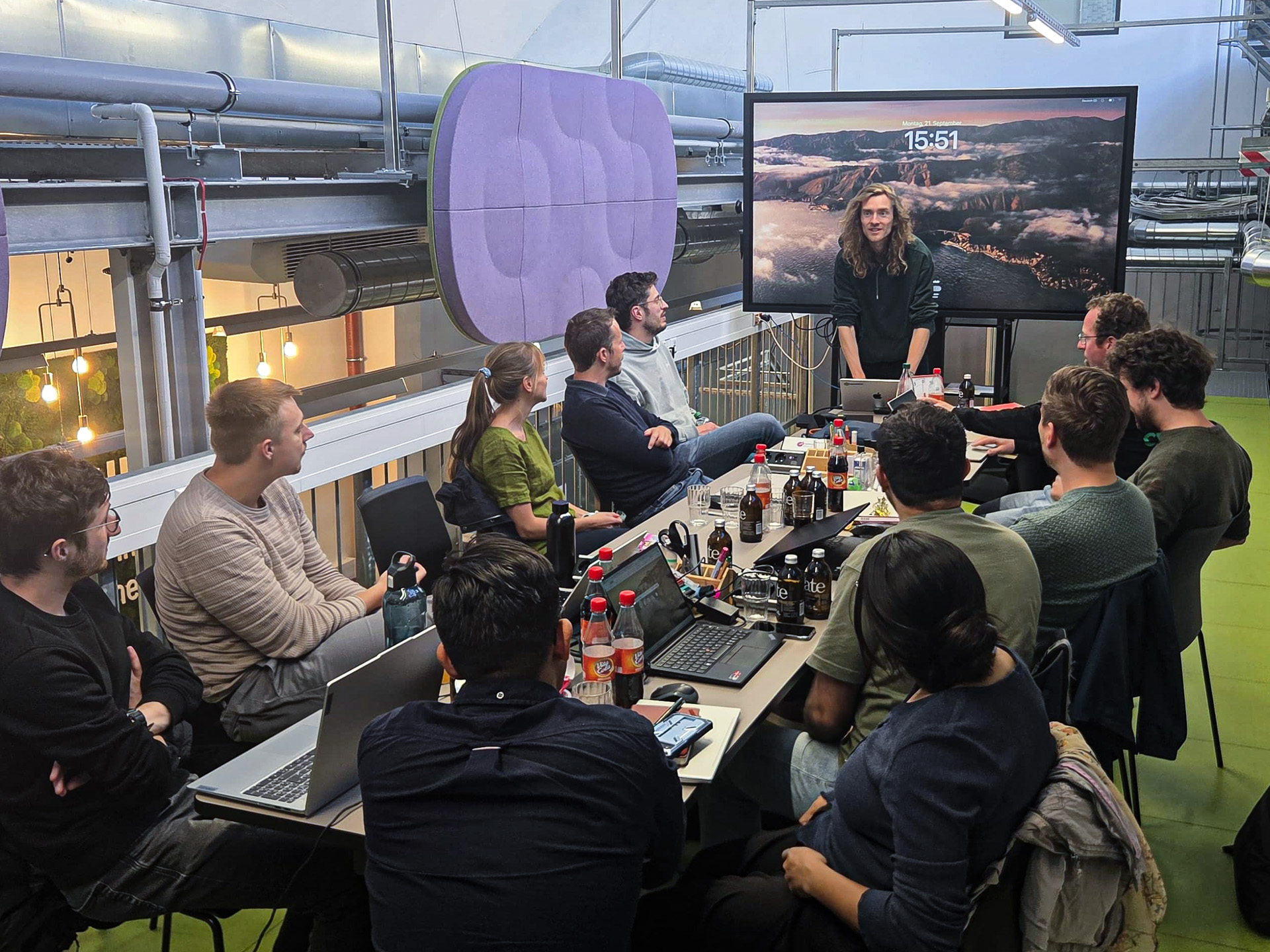
How can an idea from optics and photonics research be developed into a viable business case? At a joint workshop organised by JENAINNOVATION and boOst, twelve participants – ranging from Master’s students and PhD candidates to startup co-founders – explored this question. Over the course of two days, they developed real or fictional startup ideas from ideation to pitch and addressed key questions surrounding deep-tech startups.
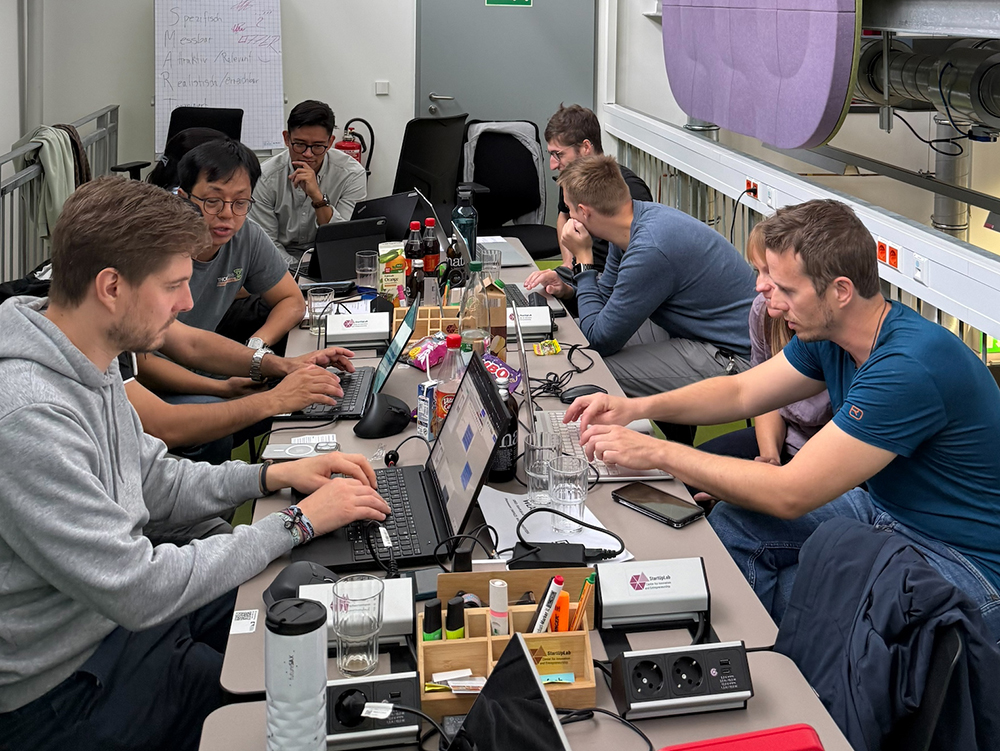
At the StartUpLab at Ernst Abbe University of Applied Sciences Jena, the focus was on working through the different stages of the startup development process. In interactive sessions, participants developed their business cases step by step before presenting them to the rest of the group. In doing so, they explored different approaches to communicating not only the technology itself, but above all its potential benefits.
The practical work on their own ideas was complemented by compact input sessions from Felix Hagleitner, Managing Director of the boOst Startup Factory. These covered basic facts and figures on startups as well as typical stages of development and common reasons why young companies fail.
The challenges of startup financing were another focus of the workshop. The group discussed why venture capital investors look for so-called “moonshots” with significant growth potential and what expectations this creates for startups. For the early stages, participants also explored available grants and how different funding instruments can be combined.
Founders Share Experiences from Practice
Benedict Diederich, founder of openUC2, and Stefan Ferdinand Müller, founder of the Ferroelectric Memory Society, provided first-hand insights into building deep-tech startups. Diederich discussed how open-source technology and startup creation can be combined. In the Q&A that followed, participants explored the practical implications of this approach.
Stefan Ferdinand Müller traced the journey from his initial research idea and building a team through to several rounds of financing, including EXIST Research Transfer and, later, venture capital. One of his key messages was to rely more on your own instincts than on external assessments when building a team – and to trust your own ability to learn. He also emphasised the crucial role founders themselves play in driving an idea forward: despite all the challenges, persistence pays off.
The workshop also addressed the handling of intellectual property in university spin-offs. Particular attention was drawn to Friedrich Schiller University Jena’s startup-friendly framework and support services. After the workshop, Felix Hagleitner said: “We are delighted by the level of talented people JENAINNOVATION attracts. Thanks to the focused target group, the participants were able to brainstorm and discuss the topics in depth.”
boOst is the Startup Factory for technology- and research-based startups in Central Germany. Together with universities, research institutions, industry partners and investors, boOst is building an internationally visible deep-tech startup ecosystem in Saxony and Thuringia. As one of ten initiatives selected by the German federal government in the EXIST flagship competition “Startup Factories”, boOst supports talents and startup teams in turning scientific innovations into market-ready, scalable companies.